Relaxation Massage
Provide a general relaxation whole body massage for women who have stress in their lives or just want to have a feel-good massage.
Whole Body Functional Relaxation Massage
Please read my article on the Truth About Relaxation Massage & What the Science Actually Says.
$100-60-minute session. (This session is more for ladies who are not comfortable with a whole body massage and covered by a towel)
$140 for a 90-minute session (This session is more whole body than the 1-hour session for better relaxation)
Functional Relaxation Massage (Women’s Health Focus)
Functional Relaxation Massage is a gentle, full-body treatment designed to support relaxation, muscular comfort, and nervous system balance across all stages of a woman’s life. Using slow, flowing massage techniques with light to moderate pressure, this treatment helps the body down-regulate from stress and return to a sense of ease.
This approach considers how hormonal changes, daily load, posture, exercise, stress, and life stages can influence how the body feels. It is not a remedial or deep tissue treatment, but it may help ease general muscular tension and support overall physical comfort and wellbeing.
Supportive for women during:
Menstrual cycle changes, including premenstrual tension and fatigue
Postpartum recovery (once cleared for massage)
Perimenopause and menopause transitions
Periods of increased stress, poor sleep, or emotional load
General muscular tightness from work, parenting, or physical activity
Areas of Treatment
This full-body treatment is tailored to your comfort and may include:
Full back
Neck and shoulders
Arms and hands
Full glutes
Abdomen (abdominal muscles)
Chest (optional and only included with your consent; otherwise, this area is excluded)
Front and back of legs, including inner thighs/groin area (always within your comfort level)
Feet (Not all ladies like a foot massage, which is at the end of the session). If you have cracked feet, then no foot massage due to health sessions.
This session doesn't have firm pressure, and areas of treatment are guided by your preferences, boundaries, and comfort.
Consent & Boundaries
Your comfort, privacy, and consent are central to every treatment. All areas of the body are discussed before your session, and you remain in control of what you are comfortable receiving.
Sensitive areas, including the abdomen, chest, and inner thighs/groin region, are only included with your explicit consent and can be excluded at any time. Professional draping is used throughout the treatment to ensure privacy, dignity, and comfort are maintained. (But saying this, some ladies did like to be covered, and that's ok, as they are paying for the session)
If you want to wear underwear and you don't have a G-string, there will be a disposable G-string for you to use, and you can take it with you when you leave!
You are welcome to communicate your preferences before or during your session, and adjustments can be made at any point.
This is a strictly professional treatment focused on relaxation, well-being, and functional comfort.
Benefits may include
Reduced muscular tension and physical tightness
Support for nervous system regulation and stress reduction
Greater sense of calm, grounding, and body awareness
Improved comfort during hormonal or life-stage changes
Time for rest, recovery, and self-care
Better sleep quality for some clients
Feeling lighter, more balanced, and restored after treatment
What to Expect
Functional Relaxation Massage is a supportive, non-medical treatment focused on relaxation and functional wellbeing rather than diagnosis or treatment of medical conditions.
Each session is tailored to how your body is presenting on the day, with an emphasis on creating a calm, respectful environment where you can fully switch off and reconnect with your body.
Table Size & Client Safety
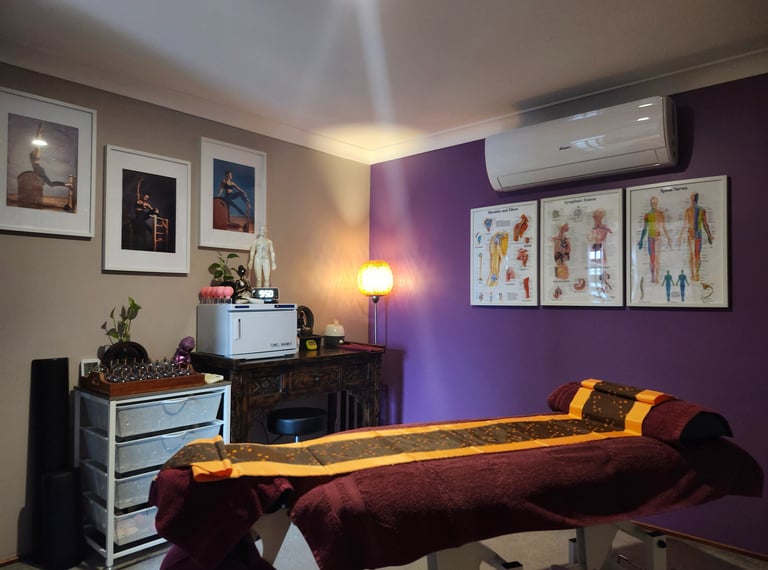
My electric massage table is a professional sports and remedial treatment table designed to support active and therapeutic massage techniques. While it has a strong weight capacity, it is narrower than some spa-style treatment tables.
For safety and comfort reasons, clients must be able to lie comfortably on the table with their arms resting alongside their body without risk of falling off the sides. Clients also need to be able to turn over independently and safely during treatment.
If you have any concerns about the table width in relation to your body size, mobility, balance, or comfort when changing positions, please contact Ray before booking so we can discuss whether this treatment setup is suitable for your needs.
Client and practitioner safety, dignity, and comfort are always prioritised above all other considerations, including bookings or payment.
What the Science Actually Says
Wellness marketing often makes strong claims about massage—such as “detoxing the body,” “flushing toxins,” or “breaking down fat cells.” These statements are not supported by scientific evidence. The body already has highly efficient systems for these functions, primarily the liver, kidneys, lymphatic system, and normal metabolic processes.
However, removing marketing myths does not reduce the value of massage. In fact, research in neuroscience, physiology, and psychoneuroimmunology shows that relaxation-based massage has measurable effects on the nervous system, stress regulation, and overall well-being.
Functional Relaxation Massage is best understood not as a “detox” treatment, but as a nervous system–based intervention that supports regulation, recovery, and physical ease.
1. Supporting the Nervous System to Shift into Rest and Recovery
The autonomic nervous system regulates involuntary functions such as heart rate, breathing, digestion, and stress response. It operates through two primary branches:
Sympathetic nervous system (fight-or-flight): activated during stress, demand, or perceived threat
Parasympathetic nervous system (rest-and-digest): responsible for recovery, digestion, tissue repair, and restoration
Many women today experience prolonged activation of the stress response due to workload, emotional labour, caregiving responsibilities, and constant mental load. Over time, this can contribute to feelings of fatigue, tension, sleep disruption, and difficulty fully relaxing.
Research shows that slow, rhythmic touch and massage techniques stimulate sensory receptors in the skin that communicate with the brain and help shift the body toward parasympathetic activity. Studies measuring heart rate variability and stress markers indicate that massage can support a measurable relaxation response, including reduced heart rate and a calmer physiological state.
In practical terms, this means the body is better able to move out of “high alert” mode and into a state more conducive to rest and recovery.
2. Supporting Stress Hormone Regulation
When the body is under stress, it releases cortisol, a hormone involved in energy regulation and survival responses. Cortisol is essential in short bursts, but prolonged elevation can be associated with disrupted sleep, increased muscle tension, and ongoing feelings of stress or overwhelm.
Clinical research, including studies from institutions such as the Touch Research Institute at the University of Miami, has shown that massage therapy may be associated with reductions in cortisol levels and improvements in stress-related symptoms over time.
While individual responses vary, many clients report feeling mentally clearer, calmer, and more emotionally settled following treatment. These effects are consistent with a down-regulated stress response rather than a “detoxification” process.
3. Supporting Mood, Relaxation, and Sleep Quality
Massage has also been shown in research to influence neurotransmitters involved in mood regulation and relaxation, including serotonin and dopamine. These chemicals play a role in emotional well-being, motivation, and the body’s ability to transition into rest states.
Serotonin is also involved in the production of melatonin, the hormone that helps regulate sleep-wake cycles. This may help explain why many people report improved sleep quality following a relaxation massage.
While massage is not a treatment for sleep disorders or mental health conditions, it can be a supportive tool for improving relaxation and preparing the body for rest.
A Functional View of Relaxation Massage
From a functional perspective, massage is not about “fixing” the body or producing dramatic physical changes. Instead, it supports the conditions in which the body can regulate itself more effectively.
For women navigating hormonal changes, stress, physical load, and emotional demands, this type of treatment can provide structured time for rest, nervous system support, and physical ease.
It is not a luxury indulgence—it is a supportive practice that contributes to overall wellbeing and recovery in a modern, high-demand lifestyle.
Working With Vulnerable People (ACT) Registered (WWVP)
Contacts 0435-626-343