Welcome To Athletic Sports Massage Canberra, Specialising In Women's Health Only

Myofascial Cupping is free for regular clients, and it can be included within your remedial or sports massage time.
Modern Tissue Decompression for Performance & Recovery
Welcome to a specialised space where science meets recovery. At my clinic, Myofascial Cupping is used as a Western musculoskeletal therapy to decompress soft tissue, improve fluid dynamics, and restore your body’s natural movement.
As a commitment to my community, regular clients receive Myofascial Cupping as a complimentary addition to their tailored treatment plans.
Warning: if you have sensitive skin, don't get any cupping!
Real Results
I believe in 100% transparency. Throughout this site, you will see photos of my amazing female sports clients with their permission to use on my website. Everyone has a different outcome. These are shared with their kind permission to take the mystery out of the process—showing you exactly what a session looks like and the healthy "glow" it leaves behind. (Note: Photos of back and gluteal cupping feature Ray’s own body to ensure client privacy is always respected.
Two Pathways to Restoration
I utilise two distinct clinical methods to help you achieve your goals:
1. Myofascial Cupping (Static). I use static cupping mostly.
This is a gentle, passive approach where specialised suction cups are placed on targeted areas for approximately eight minutes.
The Focus: Decompressing soft tissue, increasing localised circulation, and releasing tight fascial restrictions.
Best For: Acute muscle tightness, trigger points.
2. Functional Myofascial Cupping (Movement-Based)
A dynamic, modern approach where cups are applied while I guide you through active movement patterns (such as legs or shoulder rotations, etc.).
The Focus: Releasing fascia during movement and retraining your biomechanics.
Best For: Athletes, chronic mobility restrictions, and enhancing functional strength and performance.
Clinical Safety & Professional Standards
Your safety is my absolute priority. My practice is strictly a modern, Western-based musculoskeletal therapy. To maintain the highest clinical standards in Canberra, I do not perform Traditional Chinese Medicine (TCM), "Fire" cupping, or "Wet" cupping.
No Fire or Heat: Traditional glass and flame cupping introduce a risk of accidental burns or over suction on the skin, causing damage. I exclusively use high-quality suction tools for precise pressure control and maximum safety.
(Wet Cupping)I do not perform techniques involving incisions or bloodletting (Wet Cupping/Hijama) as it's not safe, and you can get an infection from the cuts in the areas. My practice adheres to strict non-invasive protocols.
A Note on Safety: To protect your health, I do not perform cupping on clients with compromised skin integrity or certain systemic conditions, such as diabetes.
Understanding the Risks of "Wet" Cupping. (I don't use wet cupping at all, as it's too unsafe due to the blood it sucks up into the cups) You need an Infection Control Activity Licence to deal with blood practices.
As a therapist, I believe in empowering people with scientific facts. "Wet" cupping involves breaking the dermal barrier, which introduces significant medical risks:
Infection Risks: Any procedure that draws blood requires hospital-grade sterilisation. In the ACT, this requires a specific Infection Control Activity Licence. Just washing cups in soapy water is not enough to kill bloodborne pathogens like Hepatitis or HIV.
Dermal Integrity: Breaking the skin can lead to permanent keloid scarring, abscesses, or systemic infections.
Lack of Evidence: There is no clinical evidence that "bloodletting" removes toxins more effectively than your own liver and kidneys. My practice is based on verified musculoskeletal science, focusing on fascia and muscle function rather than "detox" myths.
I follow strict Western principles. All equipment is maintained to clinical standards, ensuring your session is safe, effective, and focused entirely on your athletic longevity.
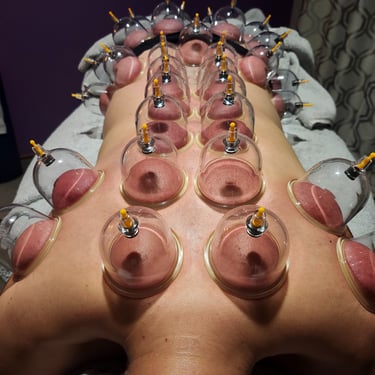
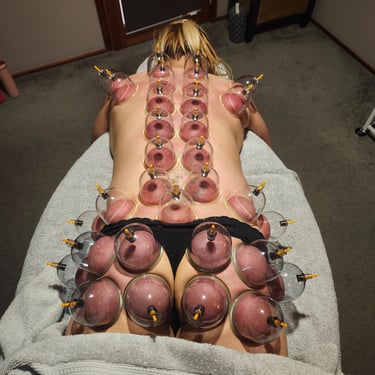
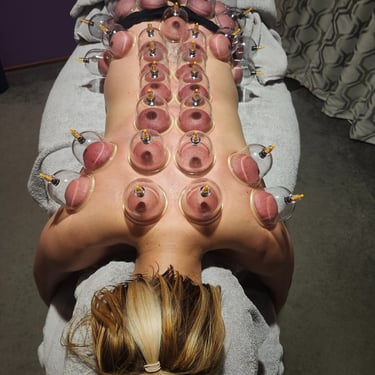
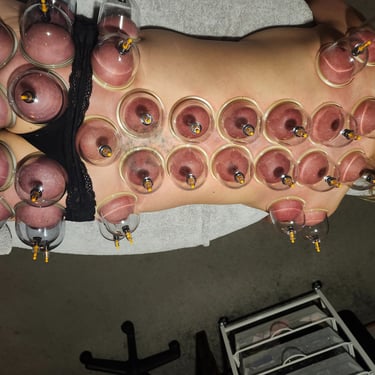
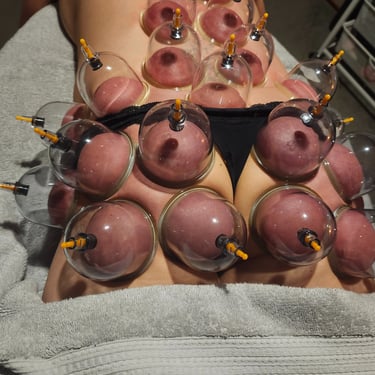
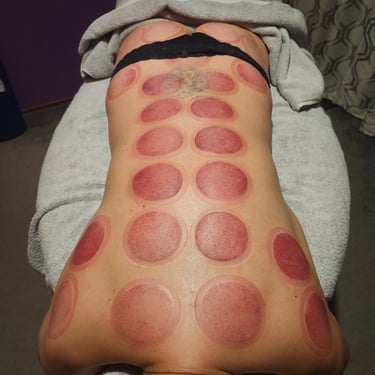
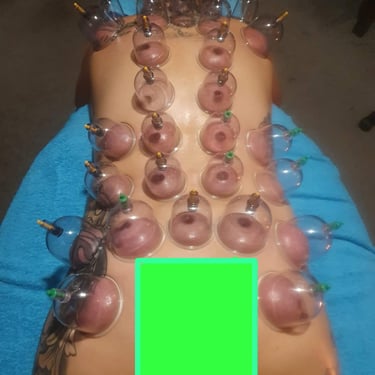
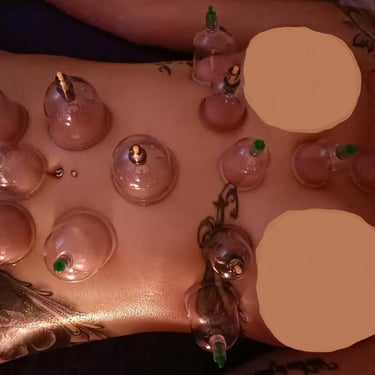
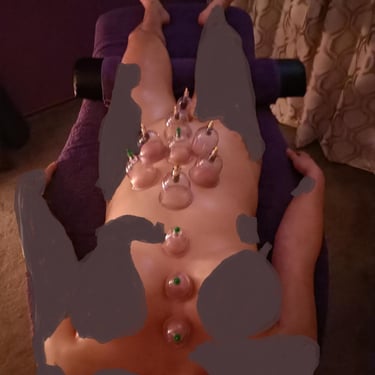
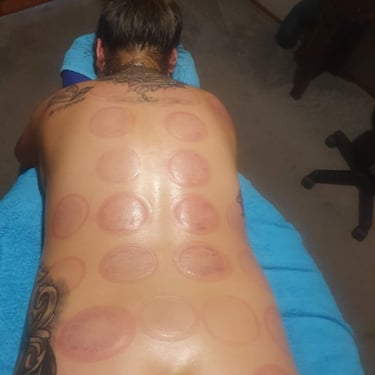
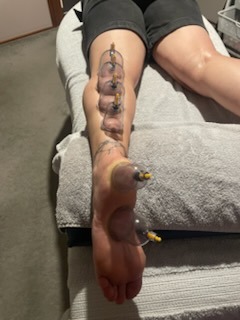
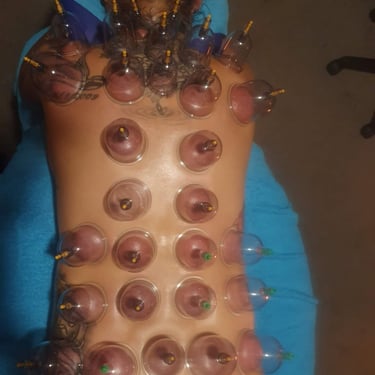
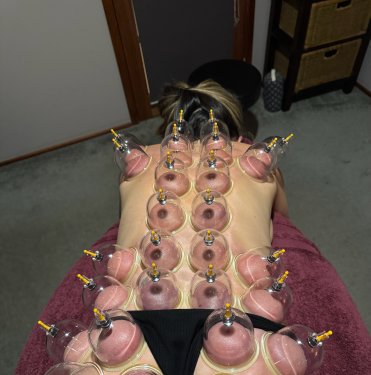
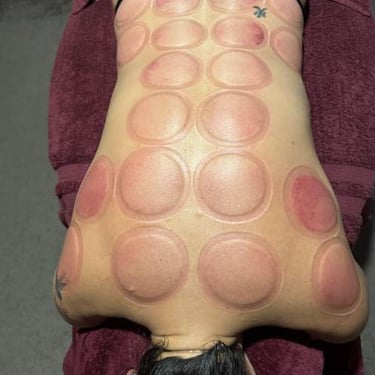
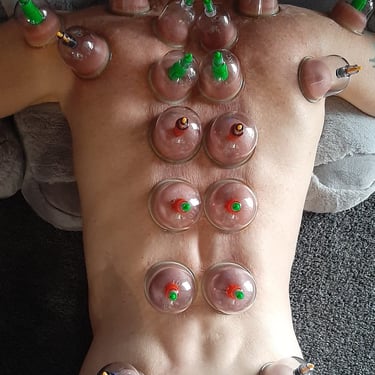

Myofascial Cupping on various parts of the female body. All photos have been obtained with full permission from my clients to use their cupping photos on my website. No photos are taken without full consent. The male body with cupping is my body.
Caring for Yourself After Myofascial Cupping
Your body has just undergone a deep, restorative process. To help you integrate the benefits of your session and support your recovery, please follow these gentle aftercare steps.
1. Hydrate to Support Your Flow
Drink plenty of water over the next 12–24 hours. Cupping stimulates your lymphatic system to move stagnant metabolic waste. Staying beautifully hydrated is the best way to help your body "flush" these systems and keep your tissues feeling supple.
2. Keep the Area Warm and Cozy
After your session, your skin and muscles will be more sensitive to the air around you. Avoid cold drafts, heavy air conditioning, or cold showers for the rest of the day. Keeping the treated area warm helps sustain the healthy circulation we’ve worked so hard to create.
3. Honour Your Body’s Need for Rest
It is perfectly normal to feel a little "heavy" or slightly fatigued—this is often called a healing response as your nervous system settles. Listen to what your body is telling you; a few hours of quiet downtime will allow your body to process the treatment more effectively.
4. Be Gentle with Heat
While we want to stay warm, please avoid intense heat like saunas, hot tubs, or steaming hot showers for 24 hours. Excessive heat can over-dilate your capillaries and may cause the cupping marks to stay visible for longer than necessary.
5. Soften Your Training Schedule
Gentle movement, like a light walk, is wonderful for blood flow. However, please avoid high-intensity workouts or heavy lifting for at least 24 hours. This gives your decompressed tissues the space they need to stabilise and find their new, healthy alignment.
6. Avoid Stimulants & Irritants
For the first 4–6 hours, try to skip the caffeine and alcohol. Both can be dehydrating and may interfere with the natural, quiet rhythm of your body’s healing response.
A Final Note on Your Progress
Every woman’s body is a unique ecosystem, and your reaction to cupping may vary with each visit. Whether you have deep marks or none at all, the internal benefits of tissue decompression are still working for you.
Working With Vulnerable People (ACT) Registered (WWVP)
Contacts 0435-626-343